Process model
Triggers, roles, data, exceptions and the target state are described together.

We start with the workflow, not the model. Goals, data, boundaries and human accountability are defined before a system reaches production.
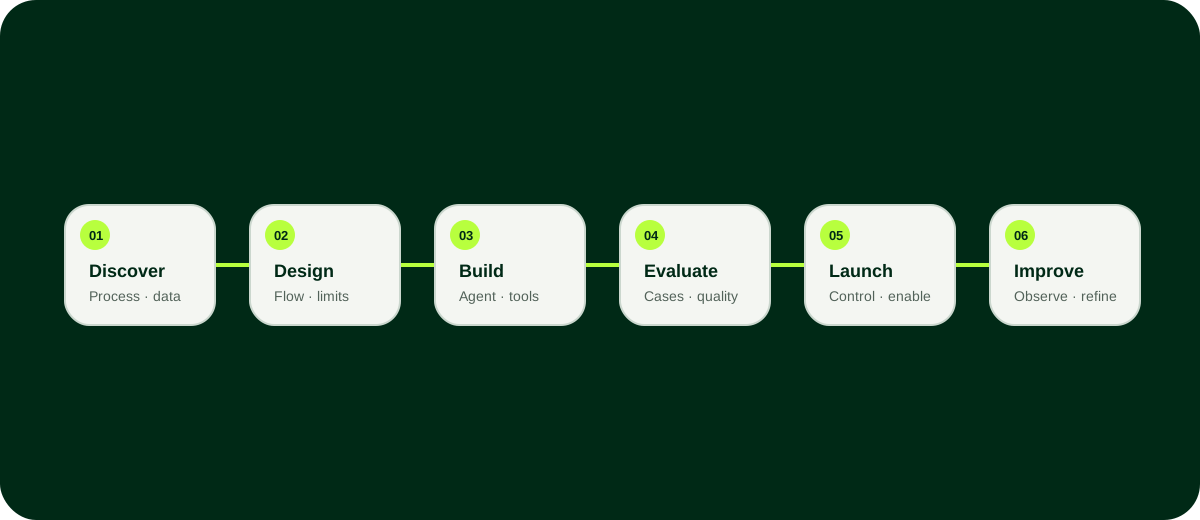
The phases provide direction. Depending on risk and maturity, we repeat a loop before moving forward.
Understand the process, users, data, constraints and target state.
Define the workflow, permissions, handoffs and success criteria.
Implement the agent, tools and required system connections.
Test normal cases, edge cases, failures and safety behaviour.
Roll out carefully, document the system and enable its users.
Observe quality and refine the system based on real use.
We trace the current workflow from trigger to outcome, including volume, exceptions, roles, data and tools. The result is a shared process model and a decision on whether AI is appropriate.
We define the target workflow: decisions, permitted actions, handoffs and quality thresholds. Privacy and accountability become testable requirements.
Delivery connects model behaviour, approved knowledge, business logic and tools. Permissions are limited to the required scope; logging and error handling are developed with the function.
Before launch, we test representative tasks, known edge cases and deliberately difficult situations against the agreed criteria.
Rollout is controlled. Users know what the system can do, where its boundaries sit and how exceptions are handled. Documentation and escalation paths are in place.
After launch, usage, failures and handoffs are observed. Changes are traceable and evaluated again, making quality an ongoing operational responsibility.
Every phase creates an artefact that can be reviewed before more investment is made.
Triggers, roles, data, exceptions and the target state are described together.
Quality, permitted actions and escalations are represented in concrete tests.
Accountability, monitoring, changes and incident handling are assigned.
In the strategy call, we examine the workflow, systems and risks and give you a clear view of the sensible next step.