Transparency
People know when they are interacting with AI, why it is used and when a team takes over.

An AI system is ready for operations only when people understand its purpose, boundaries and accountability. We plan control, evaluation and failure handling from the start.
Implementation depends on the data, users and risk of the case. These principles are our starting point.
People know when they are interacting with AI, why it is used and when a team takes over.
Use only the data, retention and access the defined workflow requires.
Route sensitive, unclear or out-of-scope situations to accountable people.
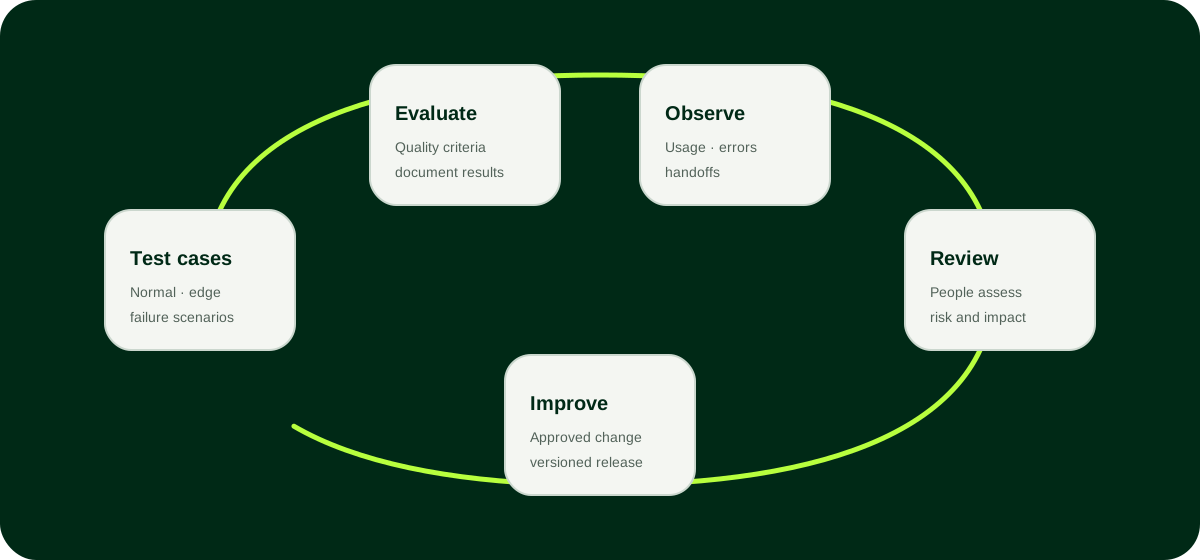
Test behaviour against representative tasks, edge cases and explicit criteria before and after launch.
Record failures, limit impact, investigate causes and re-evaluate changes.
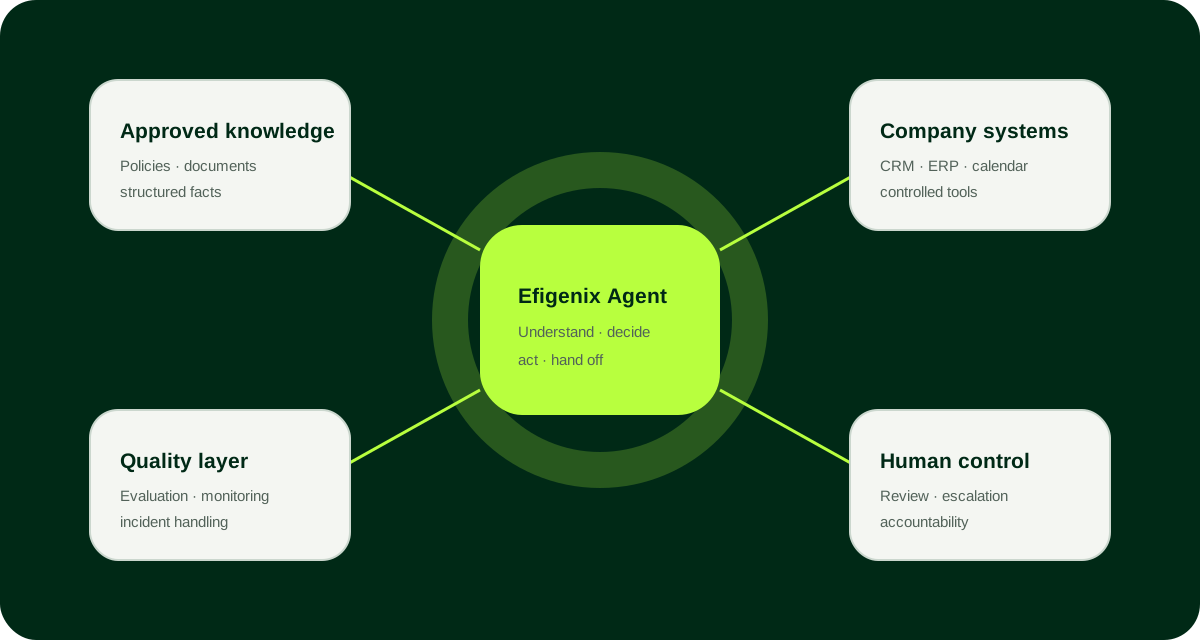
We describe what a system is expected to do and what it must not do. Permitted actions, prohibited content, user groups and handoff cases are defined before implementation. Interactive AI also needs clear identification in the user experience.
Data sources are not connected by default. We examine which content is required, who may access it and how long it is needed. Tool permissions are limited so an agent can only perform intended actions.
A generic “hand over to a person” button is not enough. We define the trigger, target role, context and response path so a team can continue without unnecessary repetition.
Quality is made measurable for each workflow. Criteria can include correct routing, completeness, safe refusal, appropriate handoff and successful tool actions.
Production systems need routes for reporting errors and incidents. Critical actions must be stoppable. Lessons are incorporated into rules, data or system logic in a controlled way.
These questions make responsibility visible across the business, technology and operating teams.
Who owns the process, approves data and is accountable for changes?
Which uncertainty, sensitivity or exception requires a person?
Which test cases and operating signals show the system stays within agreed quality?
In the strategy call, we examine not only value but also the data, decisions and handoffs in one workflow.